Multi-track Precision
MODULE: AUDIO_ENGINE // FREQUENCY: 48kHz / 24-BIT
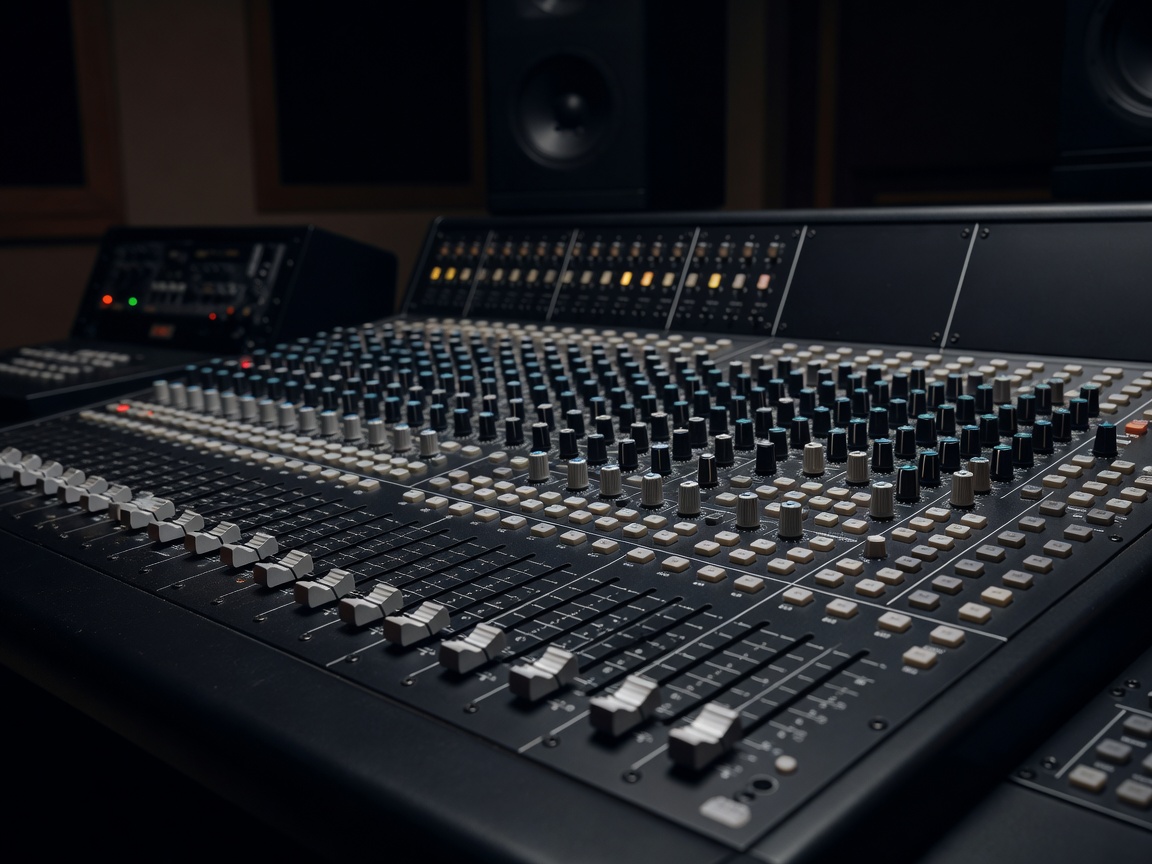
For decades, video editors were forced to "picture lock" their timelines, exporting an OMF (Open Media Framework) or AAF (Advanced Authoring Format) file to be processed in a Dedicated Digital Audio Workstation (DAW) like Pro Tools. Today, the boundary between NLE and DAW is blurring.
Sub-Frame Accuracy
Video operates at fixed framerates (e.g., 24fps or 29.97fps), meaning a single frame lasts approximately 41 milliseconds. Audio, however, operates at the sample level (usually 48,000 samples per second). NLEs like Premiere Pro and DaVinci Resolve allow editors to decouple audio from video, enabling sample-level edits. This is crucial for phasing issues, precise dialogue cutting, and advanced foley synchronization.
Fairlight vs. Essential Sound
Blackmagic Design acquired Fairlight, a legendary audio company, and integrated their technology directly into DaVinci Resolve. The Fairlight page operates as a fully functional DAW, supporting hundreds of tracks, complex bus routing, and VST/AU plugins with minimal latency.
Adobe Premiere takes a different route with its Essential Sound panel. While it supports deep VST integration and complex routing, it heavily emphasizes AI-driven tools (like Auto-Ducking and Enhance Speech) designed for rapid podcast and broadcast workflows. For intensive feature film mixing, Adobe editors still frequently dynamic-link to Adobe Audition.